

March Madness 2026 is here — and if you’ve been searching for an AI sports betting model that actually delivers, you’re in the right place. While most bettors rely on gut instinct and bracket pools, we’ve spent an entire college basketball season building and refining a data-driven NCAA tournament prediction model that turns chaos into profit.
Welcome to Donnie Dimes — where AI-powered sports betting picks meet the most unpredictable event in all of sports.
What Is an AI Sports Betting Model?
An AI betting model is a quantitative system that uses machine learning, rolling statistical analysis, and advanced efficiency metrics to predict game outcomes more accurately than the market. Unlike traditional handicapping — which AI models are rapidly replacing — an AI sports prediction model processes thousands of data points per game: adjusted offensive and defensive efficiency, pace, strength of schedule, home court advantage adjustments, and historical ATS (against the spread) performance.
Our model, V9.5, is the latest evolution of a system we’ve been backtesting and refining all season. It uses a rolling efficiency engine that recalculates team strength game-by-game — no stale preseason rankings, no end-of-year snapshots with lookahead bias. Just clean, honest, forward-looking projections that update nightly through automated optimization.
If you haven’t read the full model upgrade deep dive, go do that first. But if you want to understand why this AI college basketball betting model is a tournament machine — and how we’re deploying it over the next three weeks — keep reading.
Why March Madness Is the Best Event for AI Betting Models
Regular season college basketball betting has a rhythm. You learn the teams, track the lines, identify soft spots in the market. But when the NCAA Tournament hits, the game changes — and most bettors don’t adjust — and that’s exactly why 65% of them lose. That’s where the edge lives for anyone using a sports betting AI.
Single Elimination Breeds Chaos — and Opportunity
In a seven-game series, the better team almost always advances. In single elimination? One bad shooting night, one key player in foul trouble, one hot 3-point shooter from a mid-major nobody’s heard of — and a 2-seed is packing their bags. Higher variance means the market has a harder time pricing games correctly, and that means more opportunity for AI prediction models that can cut through the noise.
Public Money Floods the Market
March Madness is the one time of year when your coworker who doesn’t watch a single game of college basketball suddenly has strong opinions about Duke. The influx of casual money is massive. These bettors hammer brand names, top seeds, and whatever team ESPN spent the most airtime hyping. The result? Lines get pushed away from fair value on popular favorites, creating systematic value that an AI sports betting system is specifically designed to exploit.
Unfamiliar Matchups Favor Data-Driven Models
When a 5-seed from the Big 12 meets a 12-seed from the Missouri Valley Conference, most human bettors are operating on vibes. They don’t have 30 games of context on both teams. But our AI betting algorithm does. It has every possession, every efficiency metric, every pace adjustment, every strength-of-schedule factor baked in. The less familiar the matchup, the bigger the model’s advantage over the market.
Line Movement Gets Wild
During the regular season, sharp money and public money reach a relatively stable equilibrium. During March Madness betting, that equilibrium gets obliterated. Lines can swing 2-3 points from open to close based purely on public sentiment. If an AI sports prediction tool can identify the correct side before the market corrects, you’re printing value.
How Our AI Model (V9.5) Is Built for Tournament Betting
Here’s the thing most people don’t realize: the upgrades we made to V9.5 weren’t designed for the tournament. They were designed to find the most profitable sports betting patterns in college basketball. It just turns out those patterns are amplified tenfold in March.
The Underdog-First Approach
This is the single most important feature of our AI betting model. When we rebuilt V9.5, the data was screaming one thing: underdogs are the primary profit driver in college basketball ATS betting.
Not all underdogs. Not blindly betting every dog on the board. But the model identified that the biggest sustained edges come from correctly identifying which underdogs are being undervalued by the market. V9.5 is calibrated to find these spots with precision.
Now think about what happens in March Madness. The tournament is structurally designed to produce upsets. Lower seeds have nothing to lose. Public money piles onto favorites. The spread gets inflated. An underdog-focused AI sports betting model in the most upset-heavy event of the year? That’s alignment you can’t manufacture.
Small Conferences Dropped = Cleaner Predictions
One of the key V9.5 changes was removing small conference games from our betting universe. The data in those games is noisy — smaller samples, inconsistent officiating, talent gaps that make spreads meaningless. But once the NCAA Tournament proper tips off? Every team left has earned their way in. The quality of the matchups goes through the roof. Our AI prediction engine is operating in exactly the data environment it was optimized for.
The Sweet Spot: Favorites Between -3 and -5.5
V9.5 identified a specific spread range where favorites cover at an elevated rate: -3 to -5.5. These are games where the favorite is clearly better but not dominant — close enough that the market sometimes undervalues them, especially when the public is chasing upset narratives.
Guess what spread range describes a huge chunk of 4-vs-5, 3-vs-6, and even some 2-vs-7 NCAA Tournament matchups? Exactly. These are the coin-flip games on paper where V9.5 knows which side of the coin is weighted.
Neutral Court Adjustment
Home court advantage is one of the most overrated and misapplied factors in college basketball predictions. During the regular season, some teams get a massive boost at home — Cameron Indoor, Allen Fieldhouse, Hilton Coliseum. But the tournament is played on neutral courts. Teams that padded their records at home suddenly lose that edge.
V9.5’s rolling statistics already factor in team strength independent of home court inflation. We’re not caught off guard when a team that went 16-1 at home suddenly looks mortal in a neutral-site game. The AI model already knew.
Edge Cap Keeps the Model Disciplined
Every March, someone on Twitter will tell you to hammer the 16-seed moneyline because “it’s due.” V9.5 doesn’t think like that. Our edge cap prevents the model from chasing unrealistic blowout projections or fairy-tale upset picks. No 16-over-1 fantasies. No 15-seed parlays. Just clean, profitable, disciplined AI-generated sports picks.
Historical NCAA Tournament Data That Supports AI Betting Models
This isn’t just theory. The historical data from the NCAA Tournament supports exactly what our AI sports betting model is built to exploit.
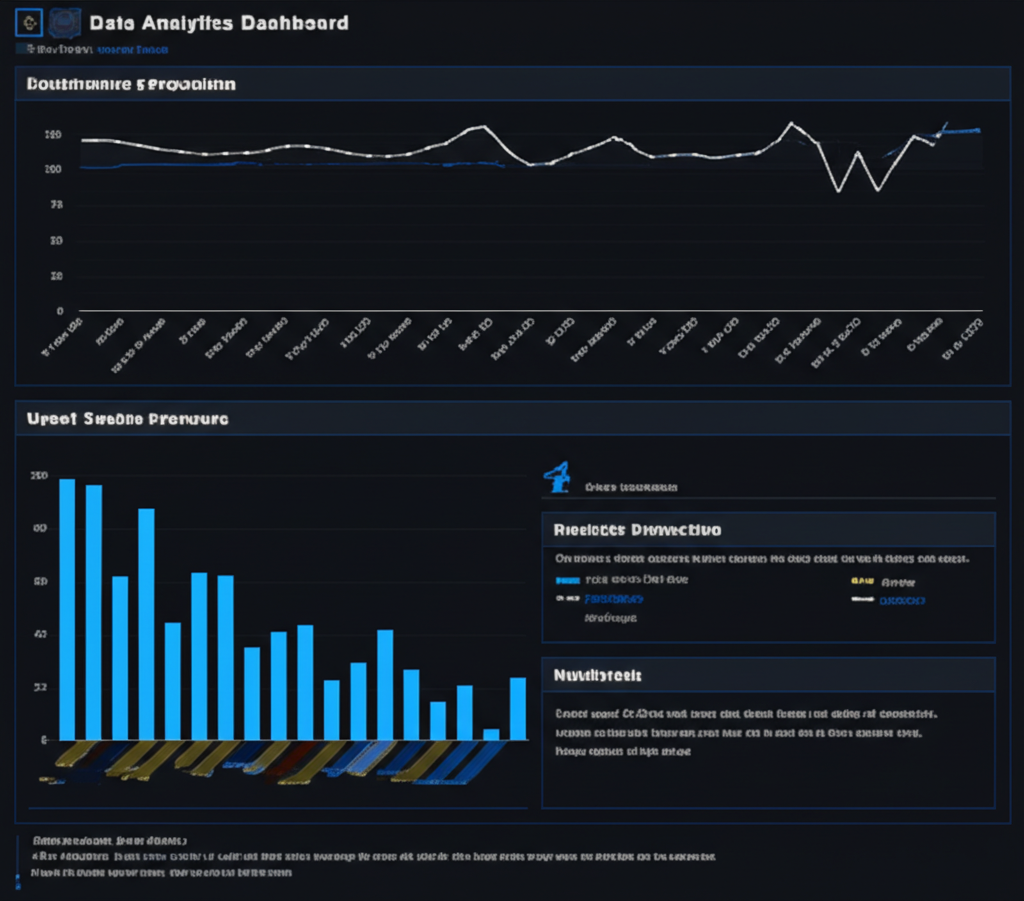
| Matchup (Seed) | Historical Upset Rate | Dogs ATS Win Rate | Key Insight |
|---|---|---|---|
| 5 vs. 12 | ~35% | ~52% | The most famous upset seed — and it covers even more than it wins outright |
| 4 vs. 13 | ~21% | ~48% | Market overvalues 4-seeds; 13s cover at near-coin-flip rates |
| 3 vs. 14 | ~15% | ~45% | Occasional Cinderella, but ATS value is real even when they lose |
| 6 vs. 11 | ~37% | ~53% | Arguably the best upset-value matchup in the entire tournament |
| 7 vs. 10 | ~39% | ~51% | Essentially a toss-up that the market prices like a clear favorite game |
| 8 vs. 9 | ~48% | ~50% | True coin flip — model edge here comes from line shopping |
In Rounds 1 and 2, underdogs consistently cover at rates that make them profitable over large samples. The public overvalues brand-name programs — your Dukes, your Kentuckys, your Kansases — and the spread reflects that bias. An AI betting model specifically tuned to find underdog value is operating in its ideal environment.
What We Skip: First Four and Play-In Games
The First Four games feature teams that barely made the field — often with thin data profiles and inconsistent recent play. Our minimum-games filter naturally screens these out. We’re not betting just to bet. The AI model waits for the real tournament to begin.
How to Use AI Sports Betting Picks for March Madness 2026
Alright, enough background. Here’s what the next three weeks look like inside The Lab — our members-only platform for AI-generated college basketball picks.
Daily Picks, Every Morning
During the tournament, AI-powered picks will be posted every morning before tip-off. No scrambling at game time. No last-minute panic plays. You’ll have the full card with time to get your bets down at the best available numbers.
Higher Volume = More Plays
During the regular season, we’re selective — typically 1-2 plays per day. But March Madness floods the board with power conference quality matchups all at once. Rounds 1 and 2 feature 32 and 16 games respectively, almost all involving teams in our model’s wheelhouse. Expect 2-5 AI picks per day during the first two rounds. That’s where the volume — and the profit potential — spikes.
Full Transparency on the Results Page
Every single pick will be graded and tracked on our results page in real time. Full transparency. No hiding losses, no cherry-picking winners. You’ll see exactly how our AI sports betting model performs when it matters most.
Sweet 16, Elite 8, and Beyond
As the field narrows, so does our volume — but the edges can actually get sharper. By the Sweet 16 and Elite 8, the market has had time to react to earlier rounds, but our model has rolling data that incorporates tournament performance. Teams that exceeded expectations in Round 1 might be overvalued in Round 2. Teams that squeaked by might be undervalued. The AI adjusts in real time — no stale ratings.
Why Subscribe to an AI Sports Betting Service?
The sports betting market is more competitive than ever. Lines are sharper, books are more sophisticated, and casual bettors are getting squeezed. To maintain an edge in 2026, you need tools that process more data, faster, with less bias than any human handicapper can. We broke down why AI is the only edge left in sports betting — and the tournament is the ultimate proof.
That’s what The Lab offers:
- AI-powered daily picks for NCAAB and NBA — not opinions, data
- Full model transparency — you see the logic, not just the pick
- Real-time graded results with season-long ROI tracking
- Backtested methodology — no black boxes, no hype
- Tournament-specific optimization during March Madness
- MLB picks launching soon for the 2026 baseball season
Whether you’re a serious bettor looking for an AI edge in sports betting, or you’re just tired of losing money following Twitter touts, V9.5 is the real thing — built by data, graded by results.
Don’t Watch March Madness From the Sidelines
March Madness is three weeks long. It comes once a year. And this year, we have the most refined version of our AI college basketball prediction model ever built — one that’s specifically aligned with the dynamics that make tournament betting profitable.
The underdog-first approach. The sweet spot favorites. The edge cap discipline. The neutral court adjustments. Every piece of V9.5 was built by the data, and the data says the NCAA Tournament is where it all comes together. As we wrote in our piece on why The Lab is the future of sports betting — this is what data-driven wagering looks like.
If you’ve been on the fence about trying AI sports betting picks, this is the moment. Tournament picks start soon, and once the bracket drops, it moves fast.
Let’s have a March to remember.